Professional Custom Stickers Printing Manufacturer Since 2005
Language
Professional Custom Stickers Printing Manufacturer Since 2005
To put it simply, the production process of adhesive labels includes three processes: prepress, printing and post press processing. Post press processing involves many processes, including lamination, hot stamping, die cutting, dividing, etc. In the whole production process, the environmental temperature has a great impact on the quality and performance of adhesive label products. For example, the mechanical industry standard JB/T 9111-1999, "Adhesive Label Printing Machine" requires that the printing environment temperature be 20 ℃± 2 ℃, and the press and publication industry standard CY/T 93-2013, "Printing Technology, Adhesive Label Quality and Inspection Methods" requires that the test temperature be 23 ℃± 5 ℃. However, the actual situation of many printing enterprises is difficult to achieve the appropriate temperature for printing, which will produce a series of product quality problems.
How to make the production of adhesive labels go through the winter smoothly?
To put it simply, the production process of adhesive labels includes three processes: prepress, printing and post press processing. Post press processing involves many processes, including lamination, hot stamping, die cutting, dividing, etc. In the whole production process, the environmental temperature has a great impact on the quality and performance of adhesive label products. For example, the mechanical industry standard JB/T 9111-1999, "Adhesive Label Printing Machine" requires that the printing environment temperature be 20 ℃± 2 ℃, and the press and publication industry standard CY/T 93-2013, "Printing Technology, Adhesive Label Quality and Inspection Methods" requires that the test temperature be 23 ℃± 5 ℃. However, the actual situation of many printing enterprises is difficult to achieve the appropriate temperature for printing, which will produce a series of product quality problems.
Problem analysis:
No.1 raw materials, as shown in Figure 1, most of the adhesives for the glue layer of the self-adhesive label are organic polymers, which are highly temperature dependent. In other words, their mechanical properties and viscoelasticity vary with the temperature of the external environment and the temperature of the product storage environment, Select and configure adhesives with different initial viscosity and viscosity retention to adapt to different use environments and further meet customers' needs for products.
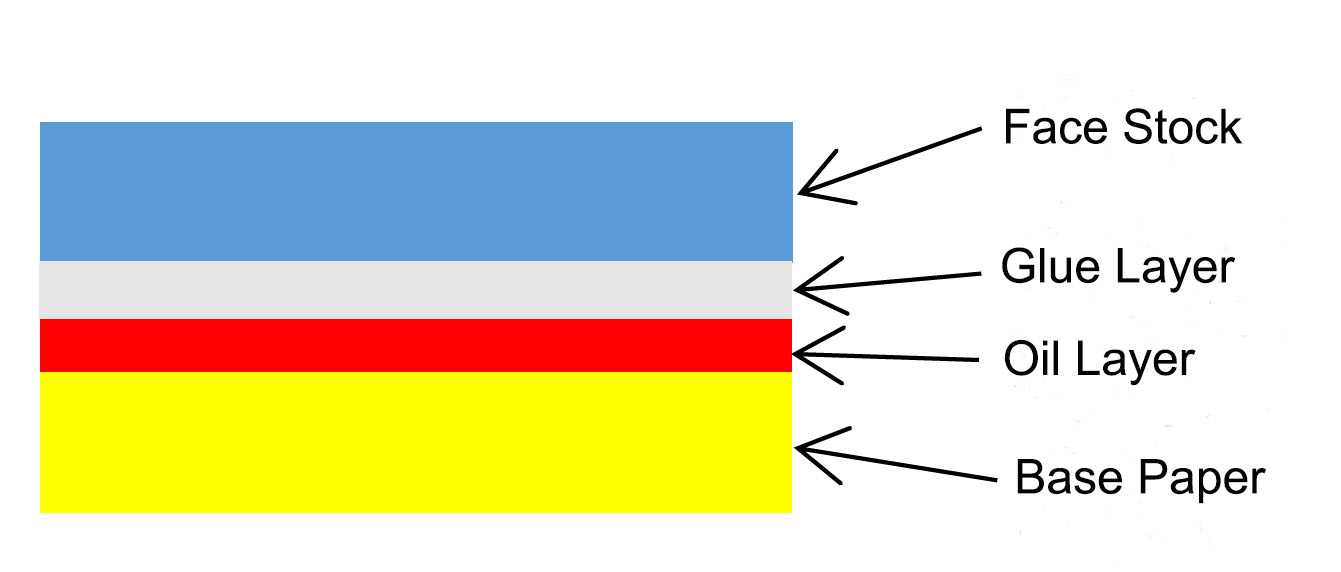
Figure 1 Structure Diagram of Adhesive Label
No.2 printing, the ambient temperature also has a great impact on printing. Especially in winter, in the absence of heating and air conditioning, the external temperature is low, resulting in low temperature of machinery, ink and printing materials. Take offset printing as an example, its printing principle is to complete the ink transfer through ink and water balance, that is, the printing plate cylinder first contacts with the water roller, so that the non graphic hydrophilic part of the printing plate is first watered, then contacted with the ink roller, so that the graphic part is inked, then the ink of the image part on the printing plate is first transferred to the blanket, and the blanket cylinder transfers the ink image to the printing material under the action of the pressure roller. If the temperature of the machine and equipment is low, the transfer effect will be seriously affected. At the same time, the low temperature of the ink will lead to the high viscosity and low fluidity of the ink, which will prevent the ink from flowing well between the ink rollers, resulting in the ink transfer is not smooth and uniform, resulting in uneven ink color on the printing surface, which will affect the image effect on the printing materials and reduce the amount of printed matter. As shown in Figure 2 and Figure 3, the local defects of two different products are shown. Among them, the right side of the barcode in Figure 2 has printing defects, and the top side of magenta field ink in Figure 3 has printing defects.

Figure 2 Printing defect on the right side of barcode
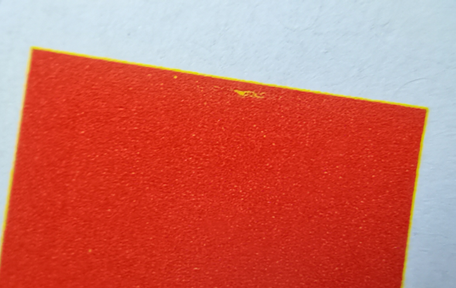
Figure 3 Printing defects on the top side of magenta field ink
NO.3 die-cutting, the quality of die-cutting effect is not only related to the problems of die-cutting cutter plate itself and pressure, but also the external ambient temperature will affect the die-cutting production process. Precise die-cutting means that the die-cutting knife just cuts the surface material and glue layer (as shown in Figure 4), while improper die-cutting can be divided into two situations: shallow die-cutting (as shown in Figure 5) and deep die-cutting (as shown in Figure 6). Among them, shallow die-cutting causes labels to be taken away by scrap, and deep die-cutting causes the bottom paper to break or be taken away by labels. When the ambient temperature is low, the fluidity of the adhesive in the self-adhesive material decreases, which leads to the failure to cut off the glue layer well during the die cutting process, which will lead to the phenomenon of label rejection, which not only reduces the production speed, but also affects the product quality.
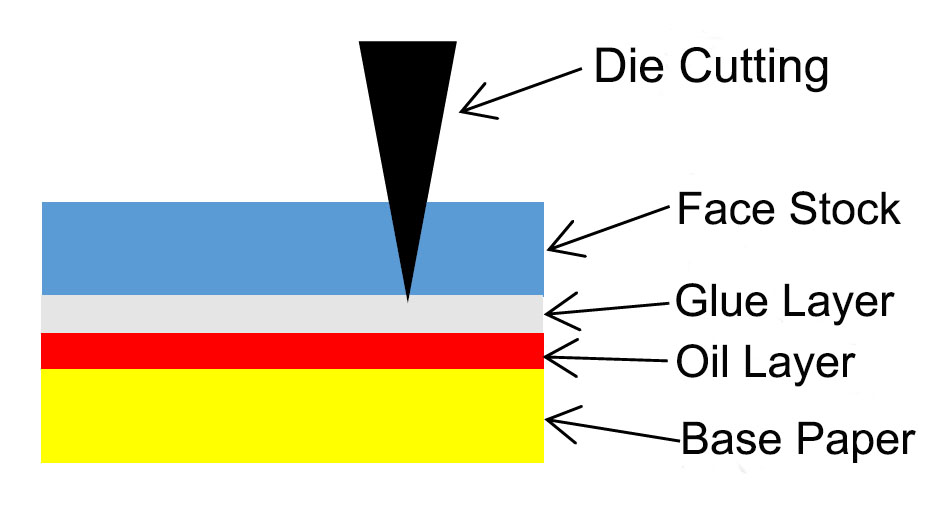
Figure 4 Die cutter just cuts off the surface material and glue layer
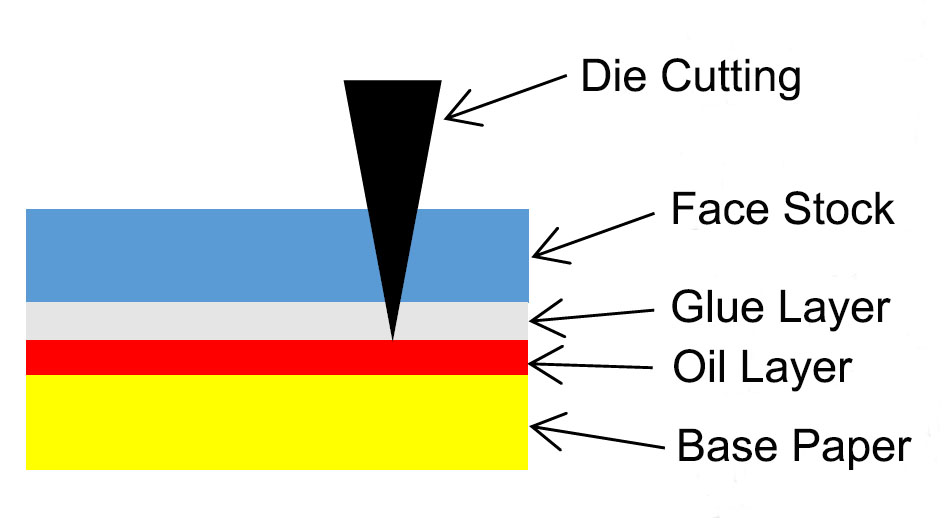
Figure 5 Shallow die-cutting
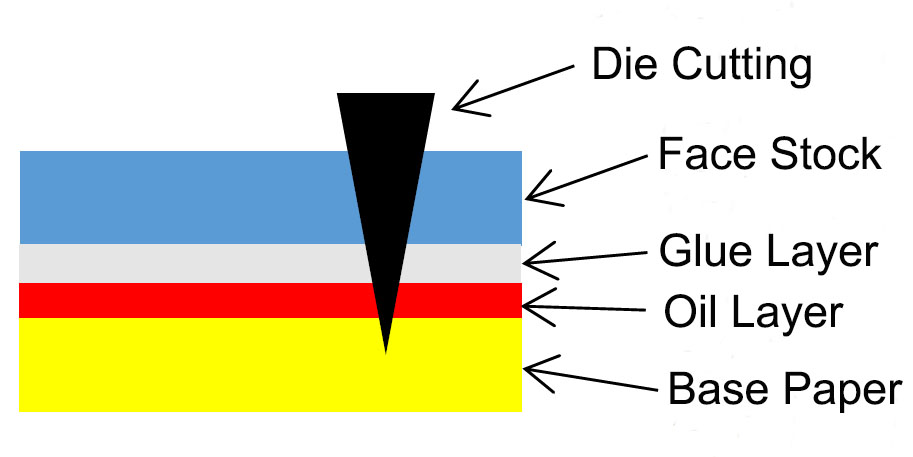
Figure 6 Deep die-cutting
If you have more questions, write to us
Just leave your email or phone number on the contact form so we can provide you with more services!

With well-equipped testing equipment and strong technical force, we have several inward rotogravure printing machines and fully automatic label printing machines.
Copyright © 2026 Shanghai Pure-easy Label Printing Co., Ltd. - All Rights Reserved.