Professional Custom Stickers Printing Manufacturer Since 2005
Language
Professional Custom Stickers Printing Manufacturer Since 2005
In daily use, adhesive labels often encounter unexpected problems such as wrinkles, misalignment, and bubbles. If these issues occur in large quantities, it can lead to significant economic losses for a business. Here are some common issues and solutions during the adhesive labeling process:
Case 1: Label Misalignment
Misalignment during labeling is a common issue. Occasional misalignment might not significantly affect production, but if it occurs frequently, it can cause major display problems. Here are some primary reasons for label misalignment:
1. Inadequate Material Stiffness:
Stiffness refers to the physical property of the label material to maintain its original shape (without curling or drooping) after being peeled off from the backing paper. If the label material is too soft or delicate, it might not have sufficient stiffness. In automatic labeling, if the material droops or curls after being peeled off from the backing paper, it may not be applied in the correct position, leading to misalignment.
Solution: If frequent misalignment occurs, observe if the label material droops or curls after peeling from the backing paper. If it does, adjust the labeling machine to ensure the label is applied immediately after peeling. This adjustment can effectively reduce the likelihood of misalignment.
2. Uneven Pressure from the Labeling Roller:
Automatic labeling machines have a labeling device, usually equipped with a sponge roller or a hard brush. This device flattens the applied label and applies pressure to ensure the label adheres closely to the object. If the labeling pressure is uneven, possibly due to improper adjustment or aging rollers, it can cause the label to misalign.
Solution: If misalignment is caused by uneven pressure, the misalignment will likely be consistent and appear in batches. Re-adjust the labeling device’s pressure or replace the worn rollers to resolve the issue.
3. Label Area Too Large:
Sometimes, labels are designed with an unnecessarily large area, using softer adhesive materials. During automatic labeling, this can cause the label to droop or curl, leading to misalignment.
Solution: Consider redesigning the label to reduce its size or use stiffer adhesive materials to avoid complications during the labeling process.
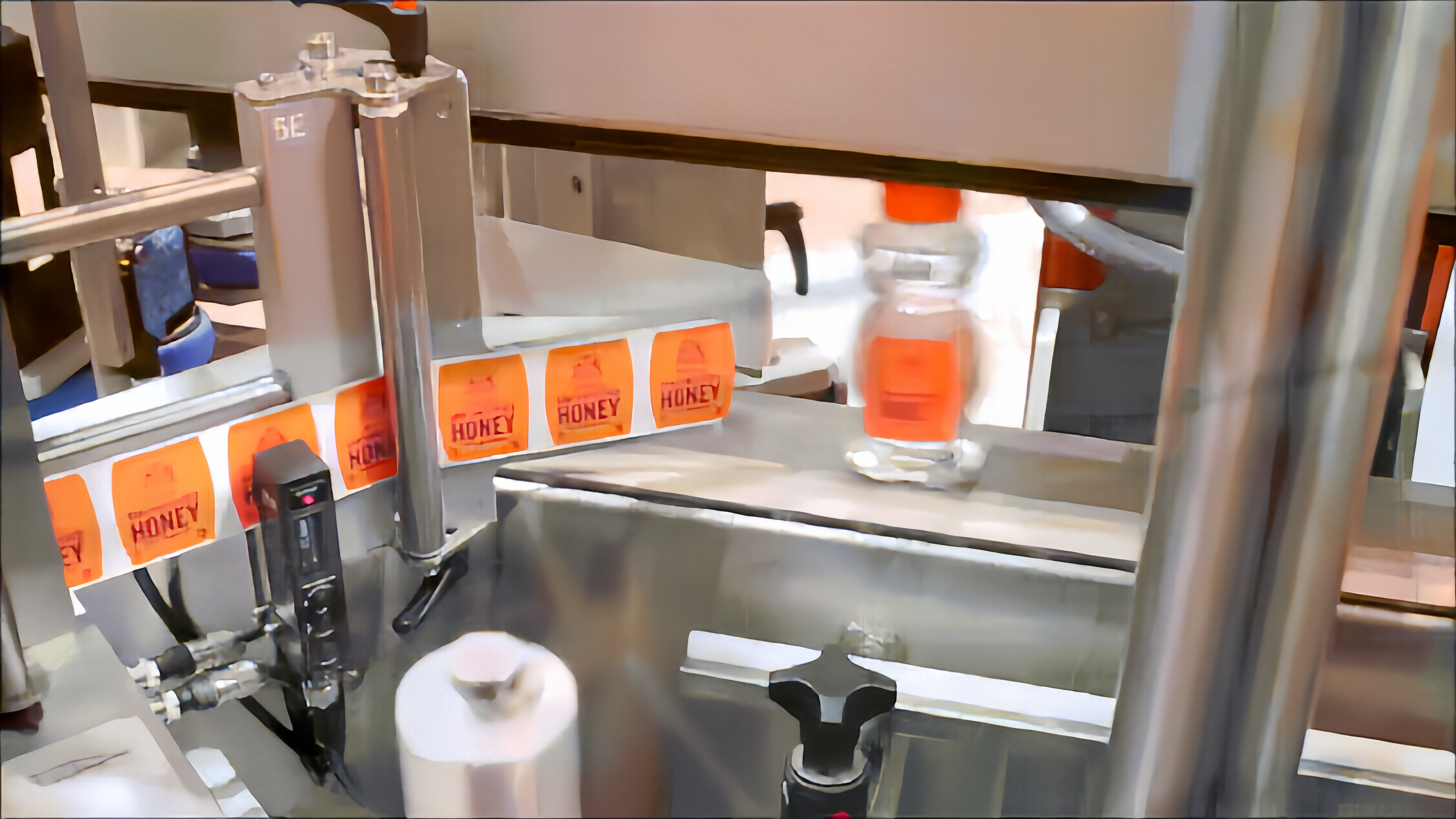
Case 2: Label Wrinkling
Wrinkling is another common issue during labeling. It may be noticed immediately after application or may appear later. Several factors can cause wrinkling:
1. Shape of the Object Being Labeled:
Adhesive labels are flat, so for optimal application, the surface of the object must also be flat. However, many bottles or objects have specific curvatures. If the curvature is too large, the label cannot fully adhere, leading to wrinkles.
Solution: Check if the wrinkles are primarily at the edges of the label. If the wrinkles are consistent, this may indicate that the labeling roller repeatedly presses the same spot during application. If the object’s curvature is too large, consider redesigning the object’s shape.
2. Uneven Labeling Pressure:
Automatic labeling machines allow for pressure adjustment. If the surface of the object being labeled is soft, excessive pressure may cause deformation, leading to wrinkles.
Solution: Adjust the labeling pressure to an appropriate level, ensuring that the label is just applied without excessive force.
3. Label Moisture Absorption:
In humid conditions, especially during the rainy season, if the label’s moisture content is significantly lower than the surrounding air, the label may absorb moisture and expand. This is especially problematic for paper-based materials, causing the label to wrinkle after application.
Solution: Before labeling in humid conditions, allow the labels to acclimate for 24 hours to balance their moisture content with the surrounding air. This can help prevent wrinkling after application.

With well-equipped testing equipment and strong technical force, we have several inward rotogravure printing machines and fully automatic label printing machines.
Copyright © 2026 Shanghai Pure-easy Label Printing Co., Ltd. - All Rights Reserved.