Professional Custom Stickers Printing Manufacturer Since 2005
Language
Professional Custom Stickers Printing Manufacturer Since 2005
According to incomplete statistics, currently, about 50% of wet glue and self-adhesive labels use a varnishing process.Printing varnish on the surface of self-adhesive labels not only protects the printed ink layer and increases the surface brightness of the labels but also enhances their water resistance, providing excellent moisture-proof effects. Additionally, some varnishes with special effects, such as printable varnish, matte varnish, and scented varnish, can add more functional attributes to the labels.
In this article, I will share some common types of varnish used on self-adhesive labels and their application fields, hoping to provide some inspiration for readers.
Types of Varnishes and Their Applications
Currently, there are various types of varnishes available on the market. Based on drying methods, varnishes can be classified into water-based varnishes, which are typically dried using hot air, and UV varnishes, which are primarily cured using UV light. Based on their purposes, varnishes can be categorized into general varnishes, high-gloss varnishes, matte varnishes, high-temperature resistant varnishes, ultrasonic sealing varnishes, anti-stick varnishes, printable varnishes, high abrasion-resistant varnishes, waterproof varnishes, anti-slip varnishes, reverse varnishes, scented varnishes, anti-static varnishes, tactile varnishes, and food packaging varnishes, among others. Below, I will introduce several commonly used varnishes from the perspective of their applications.
1.General Varnish
Self-adhesive labels consist of a face stock, adhesive, and release liner. When these materials absorb or lose moisture, their rates of expansion or contraction differ, potentially causing the labels to curl. The primary function of general varnish is to enhance the gloss and brightness of the print while providing some water resistance, thus preventing the labels from curling due to environmental humidity changes. For example, paper-based self-adhesive labels may absorb moisture from the air in humid environments, leading to wrinkling and bubbling after application. Applying general varnish helps reduce these issues by acting as a barrier against moisture.
2.Matte Varnish
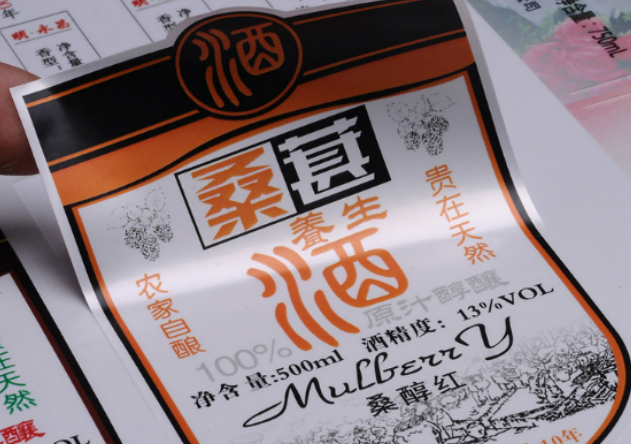
The main difference between matte varnish and gloss varnish is that matte varnish gives the printed surface a matte, frosted effect. This effect is particularly suitable for special design needs, such as for wine or cosmetic labels, where a matte finish can highlight the product’s premium quality. Besides, matte varnish also offers some water resistance.
3.Printable Varnish
Ordinary varnish, containing silicone additives, creates a smooth surface unsuitable for printing additional information, which can easily fall off. Printable varnish, however, allows for printing variable information on the varnished surface, such as production dates or batch numbers on food and pharmaceutical labels. Printable varnish forms a high surface energy layer, ensuring that printed information adheres firmly to the label surface.
4.High Abrasion-Resistant Varnish
High abrasion-resistant varnish makes the print surface extremely smooth, enhancing its resistance to friction. This varnish is essential for labels on products like cosmetics or alcoholic beverages, which undergo long-distance transport. The varnish forms a smooth protective layer that significantly improves the label’s resistance to abrasion.
5.Reverse Varnish
If a granular effect is desired on the print surface, such as a raindrop effect or a rough matte finish, reverse varnish can achieve this. Comprising two types of varnishes (top varnish and base varnish), reverse varnish chemically reacts upon application to form a granular layer on the print surface. The granularity can be adjusted as needed, making reverse varnish a unique and highly decorative option, popular for its distinct visual appeal.
6.Scented Varnish
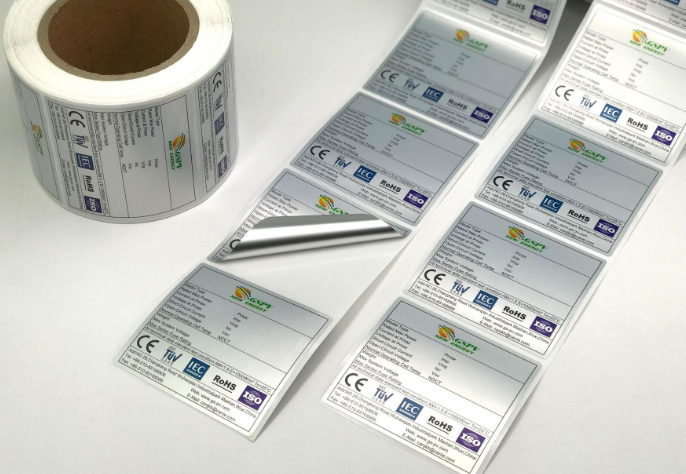
Scented varnish is used on labels that need to emit a fragrance, matching the product’s own scent, such as in cosmetics or premium foods. The varnish contains microcapsules filled with fragrance. When these microcapsules are pressed or rubbed, they release the scent. Scented varnish comes in various fragrances like fruits and flowers, making it popular in food and cosmetic labeling and even in children’s books.
7.Anti-Static Varnish
Printing on film materials can generate strong static electricity, causing issues in printing and die-cutting processes. Anti-static varnish, containing anti-static agents, effectively eliminates static on the material’s surface, ensuring smooth production processes.
8.Tactile Varnish
Tactile varnish creates a raised effect on the material’s surface, providing a noticeable texture to the touch. It’s suitable for labels requiring a clear tactile sensation, such as those with Braille. Available through screen printing and flexographic printing, tactile varnish is often used for specially designed labels requiring distinctive touch features.These various varnishes enhance the functionality and aesthetic appeal of self-adhesive labels, making them suitable for diverse applications and improving product presentation and performance.
9. Food-Grade Varnish
Traditional varnishes are not suitable for direct contact with food and can only be used for indirect contact. However, in recent years, the application of food-grade varnish has become increasingly common. The main component of food-grade varnish is ethyl ester wax, which complies with both domestic and international standards for food-grade packaging, allowing it to be used in direct contact with food. Previously, such packaging products primarily used PE lamination, but now food-grade varnish can replace PE lamination.

With well-equipped testing equipment and strong technical force, we have several inward rotogravure printing machines and fully automatic label printing machines.
Copyright © 2026 Shanghai Pure-easy Label Printing Co., Ltd. - All Rights Reserved.