Professional Custom Stickers Printing Manufacturer Since 2005
Language
Professional Custom Stickers Printing Manufacturer Since 2005
Confused about film label materials? Read our 2026 guide comparing PVC, PE, PET, and BOPP. Find the perfect durable, waterproof option for your packaging.
As we have learned in previous issues(What is label facestock? Types, materials & how to choose the right one? | Pure-easy), adhesive label surface materials are mainly divided into two mainstream categories: paper and film.Due to its own material characteristics, paper surface materials will suffer from moisture softening, yellowing and aging, blurred writing and other problems over time.
This makes them easy to break or peel off, and their durability and environmental adaptability are relatively limited.If your product labels need to withstand various complex scenarios such as moisture, oil stains, and temperature differences for a long time.
At the same time, you pursue stable and long-lasting use effects, greatly extending the service life of labels, and having more outstanding texture and performance.Film labels are undoubtedly the best and safe choice.
Common membrane materials are roughly divided into the following 4 types:
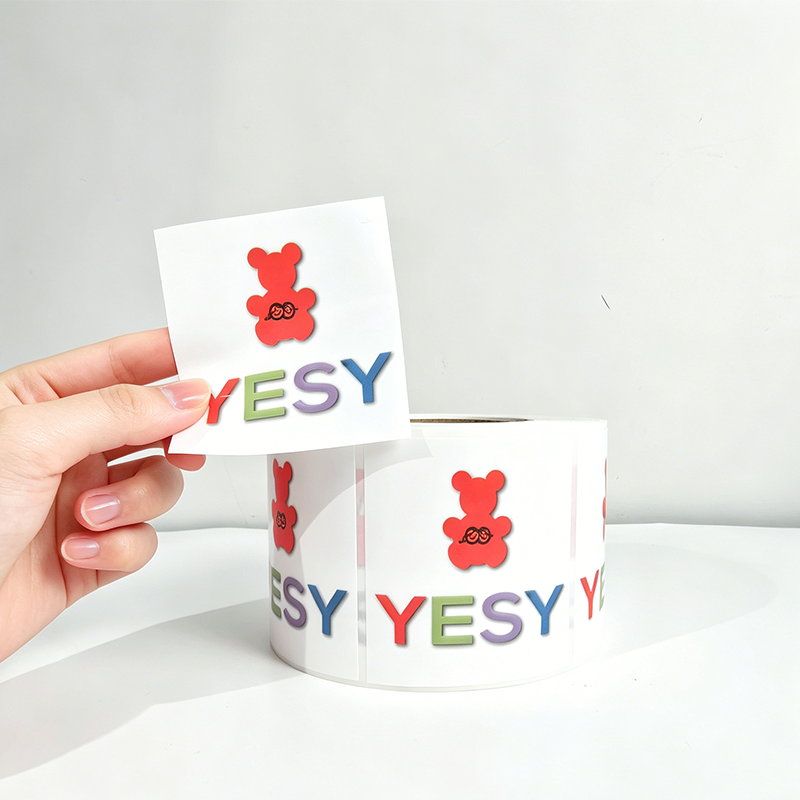
Because this material has many characteristics that ordinary paper labels cannot match, it is widely used in daily life and industrial production.
Unlike paper labels that are easily damaged by water, PVC has excellent waterproof, oil-proof and chemical corrosion resistance. And it is extremely tough and cannot be torn apart with bare hands.
It is non-flammable, strong and resistant to weathering, UV rays and abrasion. In outdoor environments, its service life usually reaches 5-10 years, and it is not easy to fade or deform.
The material is soft and can fit perfectly on curved or irregular objects such as bottles and tools.
Despite its many advantages, this material is not environmentally friendly.
It has been restricted for use by the European Union, Japan and other places and does not comply with the new environmental protection regulations in 2026.
If you want to export a cosmetics or beverage brand to the EU or Japan, you have to phase out PVC.
It is recommended to consider our [custom clear waterproof vinyl labels] (or sustainable PE materials to ensure compliance.
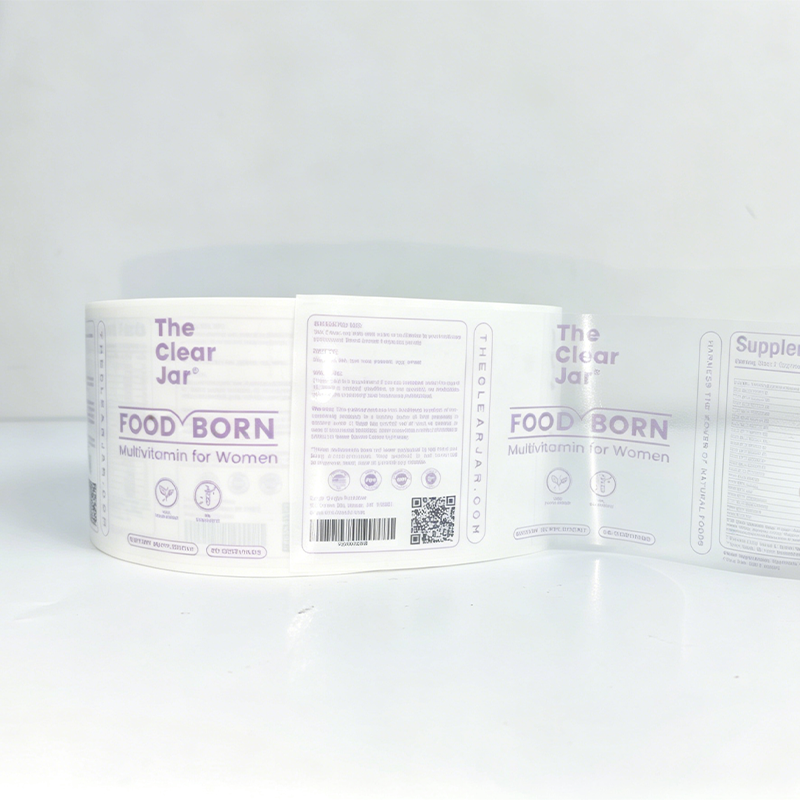
Unlike PVC materials, PE is a non-toxic and harmless material that can be recycled and has little impact on the environment.
The PE material is soft and has certain stretch resistance to better fit the shape of the object being attached.
It perfectly fits deformable surfaces, making it ideal for squeezable bottles and tubes.
The heat-resistant temperature is usually between 90℃ and 110℃, and it is not easy to become brittle in low temperature environments, meeting the needs of cold chain and hot filling.
Excellent water ,oil and chemical resistance make it perform well in various applications.
This advantages make it widely used in food packaging, beverage bottles, engine oil bottles, chemical packaging and other fields
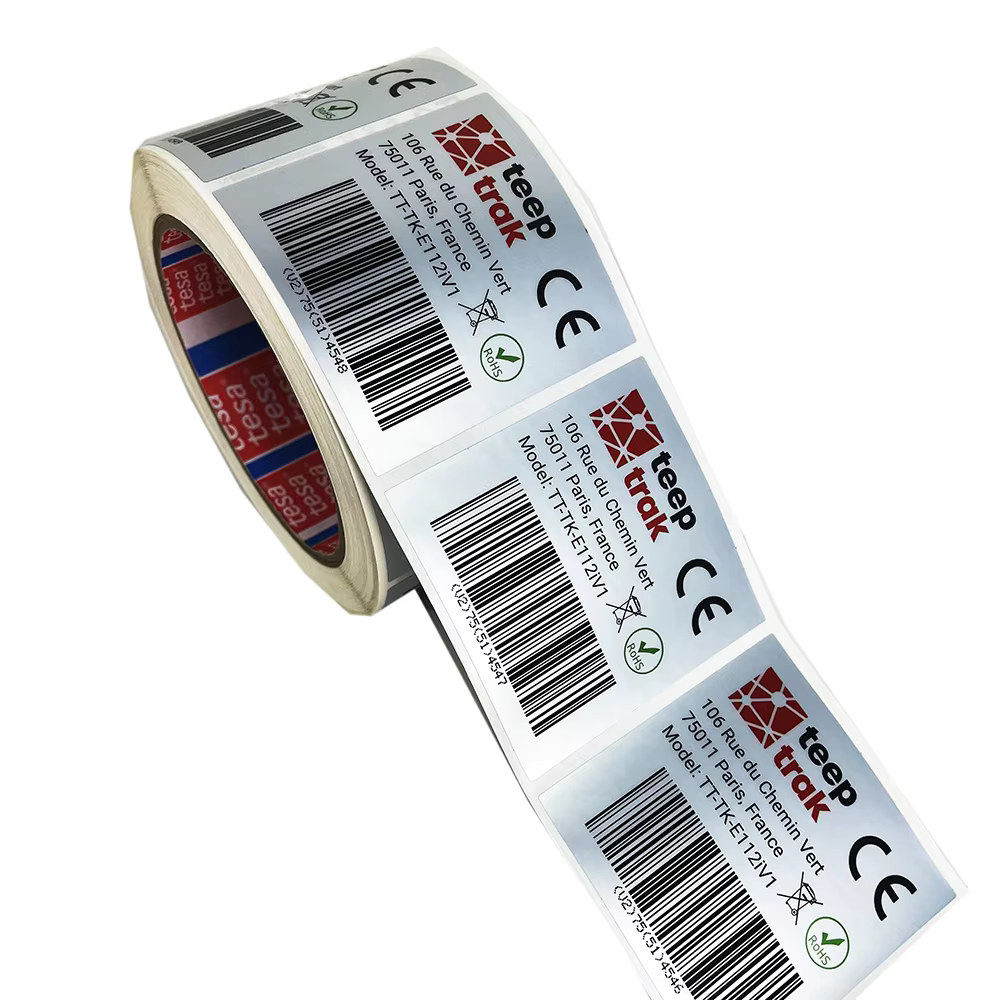
Compared with PE and PVC, PET has a harder texture and slightly less softness.
It is suitable for being attached to a flat surface or a curved surface with a large arc. If it is attached to a highly deformable hose or an object with a very small arc, the edge may be slightly warped.
PET delivers outstanding performance across the electronic appliances and chemical industries.
The surface has good tear resistance and scratch resistance, which can avoid losses during production, transportation and daily use, and always keep the label intact and clear.
According to the surface treatment, it can be divided into matte silver, transparent, brushed silver and so on.
In addition to its appearance, as an industrial label, it has stable performance in high temperature environments and will not easily deform, shrink or fall off.
Although it is highly resistant to corrosion, it may swell or degrade when exposed to concentrated sulfuric acid, strong alkali or long-term contact with certain highly polar organic solvents.
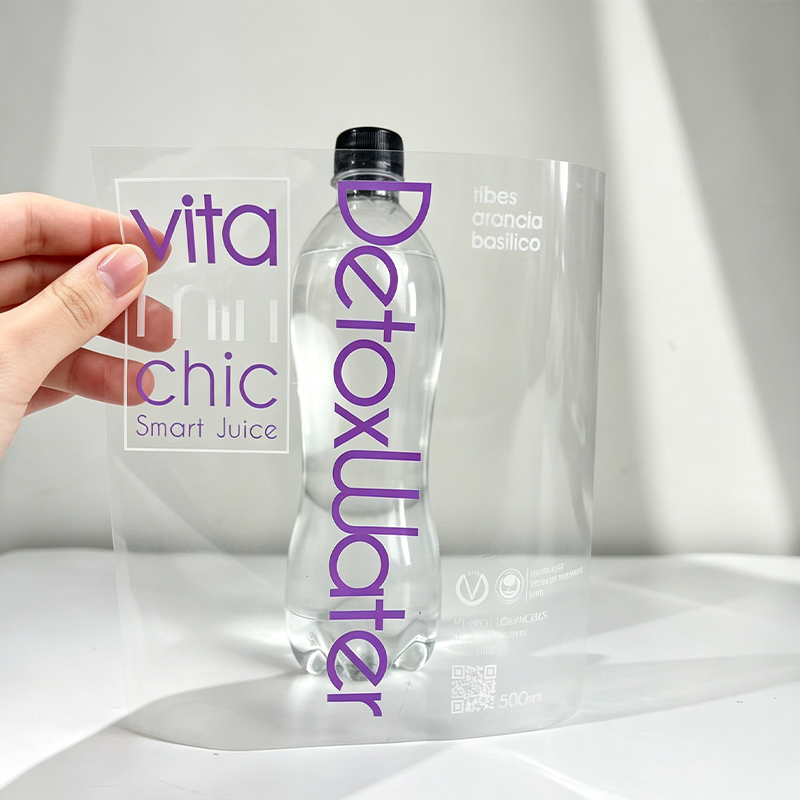
This is a self-adhesive label material with biaxially oriented polypropylene (BOPP) film as the surface material.
BOPP film has excellent transparency and gloss.
When attached to a transparent bottle, clear BOPP film for no-label look and fully display the original texture of products.
The material is relatively stiff, highly flat, and inherently has excellent moisture-proof, waterproof and oil-proof properties, which can well protect the label content.
Widely used in mineral water bottles, beverages, shampoo, shower gel, cosmetic bottle labels, etc.
Compared with materials such as PET and PVC, BOPP has lower production costs and has excellent cost performance.
The most common transparent sealing tape we use daily has a base material of BOPP.
Material | Application | Advantages | Temp. Range | Common Thickness |
PVC (Polyvinyl Chloride) | Shrink film labels Daily necessities Wire sheath | Good adhesion Waterproof Easy to print Low cost Suitable for general scenes | -15℃~60℃ | 30μm-100μm |
PE (Polyethylene) | Non-toxic product stickers | Non-toxic, Waterproof Low-temperature resistant Easy processing | -40℃~110℃ | 20μm-80μm |
PET (Polyester Film) | High-end commodity labels Electronic product labels High-temperature labels | High transparency Scratch-resistant High temperature resistant High-grade texture | -20℃~150℃ | 12μm-50μm |
BOPP (Biaxially Oriented PP) | Food labels Cosmetic labels High-definition printing stickers | High gloss Clear printing, Good flatness Moisture-proof Suitable for high-definition labels | -20℃~120℃ | 15μm-45μm |

With well-equipped testing equipment and strong technical force, we have several inward rotogravure printing machines and fully automatic label printing machines.
Copyright © 2026 Shanghai Pure-easy Label Printing Co., Ltd. - All Rights Reserved.